
At the UN, a coalition of states takes up the Rights of Nature
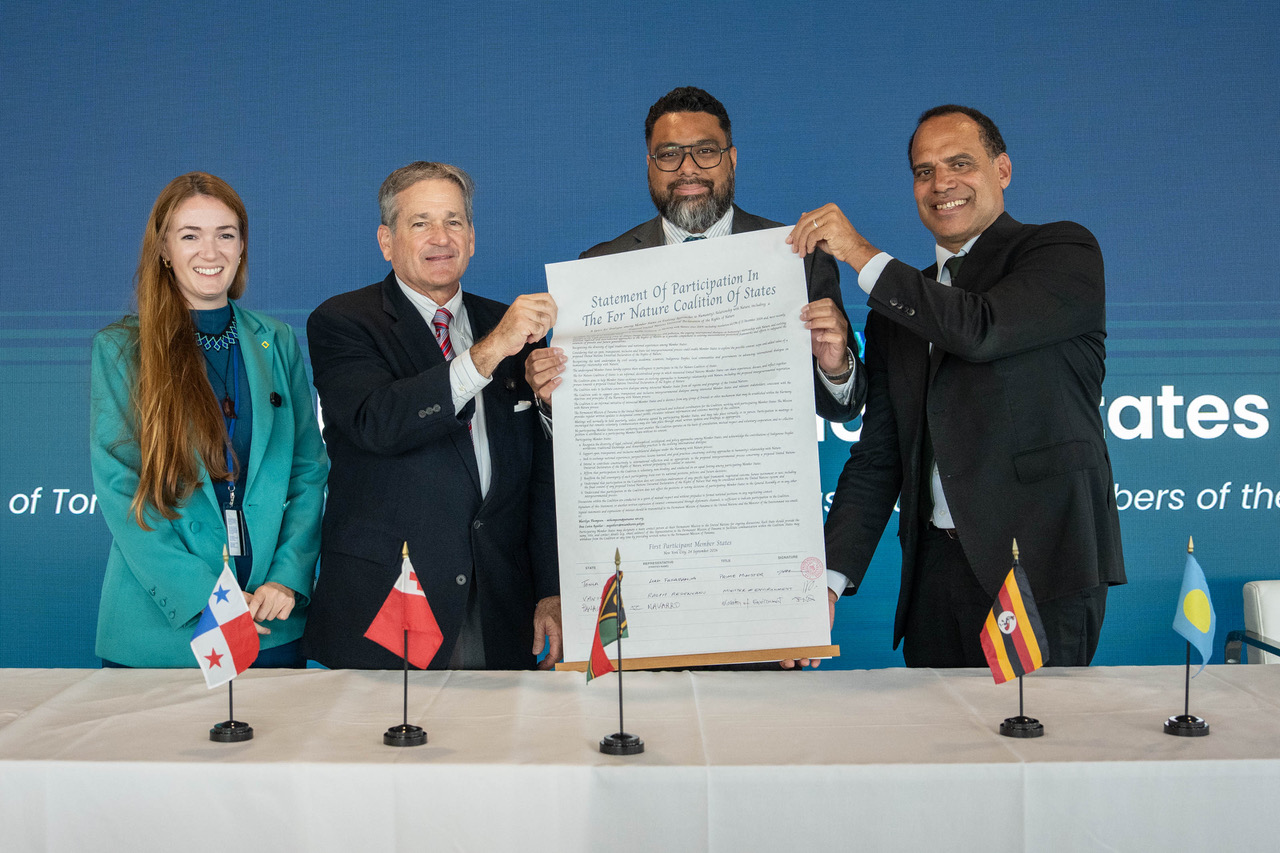
From left: Callie Veelenturf, co-founder of forNature; Juan Carlos Navarro, Panama’s Minister of Environment; Lord Fatafehi Fakafānua, Prime Minister of Tonga and Chair of the Nature Summit; and Ralph Regenvanu, Vanuatu’s Minister for Climate Change Adaptation, Energy, Environment, Meteorology, Geo-Hazards and Disaster Management, during the signing of the Statement of Participation in the For Nature Coalition of States.
Photo credit: Laurel Chor.
(NEW YORK, Sept. 29, 2026) – On Sept. 24, at a luncheon inside United Nations Headquarters during the General Assembly’s high-level week, the governments of Panama,Tonga, and Vanuatu celebrated the launch of the For Nature Coalition of States. The coalition brings together member states interested in evolving approaches to humanity's relationship with Nature, including a proposed Universal Declaration of the Rights of Nature. Three countries signed on at the launch, including Panama, Vanuatu and Tonga.
The coalition is informal and voluntary. It gives governments a place to compare their experience and shape the declaration as it moves through the UN’s Harmony with Nature process. Panama,Tonga and Vanuatu are leading the initiative. Callie Veelenturf’s organization, forNature has worked with Panama’s government on the effort since April and The Alfred Kobacker and Elizabeth Trimbach Fund is forNature’s principal funder and has supported the organization since its founding.
The forNature organization was an official partner of the Nature Summit, where the launch took place. Tonga’s prime minister, Lord Fatafehi Fakafānua, chaired the summit.
The launch came in the middle of a full week for the forNature team in New York. Callie, Rafaela Iturralde (forNature director of strategy and operations) and their colleagues spent September 20 to 25 in meetings and briefings with governments, civil society organizations and advocates. On Sept. 22, forNature joined The Oxygen Project and Chilli.club to host a gathering of Rights of Nature advocates on how the broader movement can support the path to a declaration.
The coalition is the latest step in a sequence that began in Panama. In February 2022, Panama enacted Law 287, which recognizes nature as a holder of legal rights, including the rights to exist, persist and regenerate, and to be restored when damaged. Callie, a marine conservation biologist who was studying sea turtles in Panama, brought the idea to Panamanian lawmakers and worked with them on the legislation.
In April of this year, Panama’s Ministry of Environment and forNature signed a Memorandum of Understanding in Panama City to advance a Universal Declaration of the Rights of Nature at the General Assembly. Environment Minister Juan Carlos Navarro said at the signing, “Panama is not signing a document. Panama is signing a commitment to the future.” Later that month, at EarthX in Dallas, Panama presented the proposal publicly and said it would bring it to the General Assembly in September, which led to this week’s historic achievement.
A declaration would not be a treaty, and it would not bind any country. It would put the member states that adopt it on record recognizing that ecosystems and species have rights of their own. The UN has approached the subject before. In 1982, the General Assembly adopted the World Charter for Nature, which affirmed that every form of life deserves respect regardless of its usefulness to people. Since 2009, the Assembly has returned to the subject in regular resolutions on Harmony with Nature, most recently in December 2024. A declaration would go further than any of those. The closest precedent is the Universal Declaration of Human Rights, which was not binding when it was adopted in 1948 but shaped much of the human rights law that followed.
